
What to Expect When You Get a New Business Website Built
A step-by-step guide to the website build process — from brief to go-live. What you need to provide and what a good web designer handles.
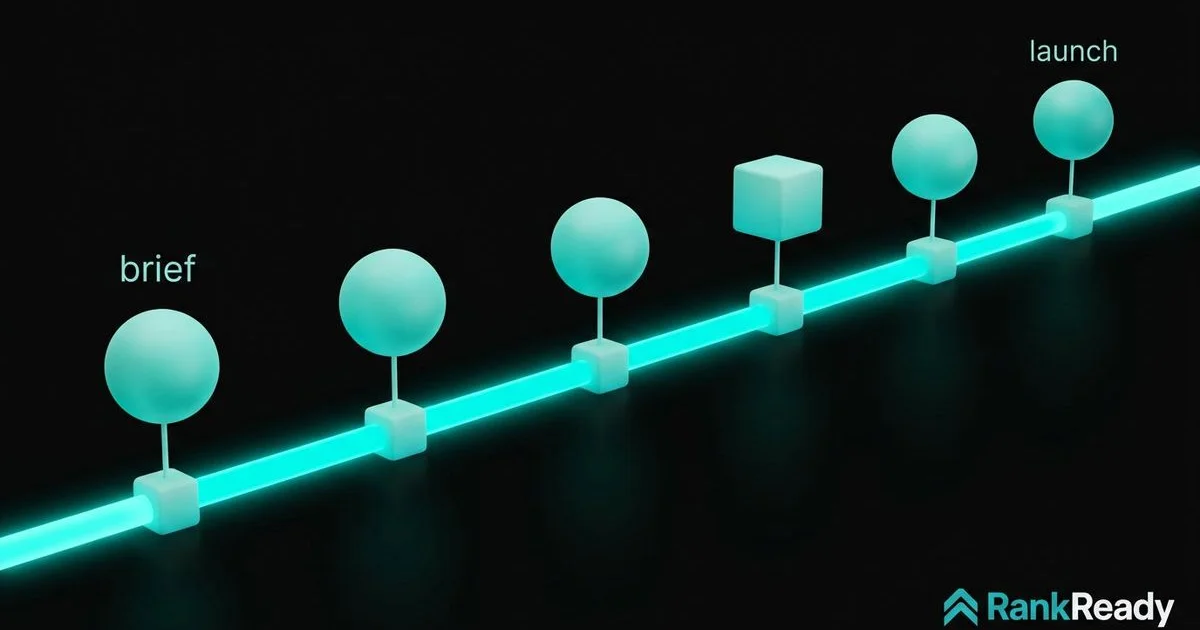
Getting a new website built often feels like a mysterious transaction.
We see this hesitation with many Sydney business owners who walk through our doors.
You hand over a deposit, wait a few weeks in silence, and hope the result matches the vision in your head.
That uncertainty is the main reason many businesses delay upgrading their digital presence.
It leads to anxiety about budgets blowing out or timelines slipping by months.
We believe the process should be completely transparent from day one.
This guide breaks down exactly what the build involves, the specific assets you need to prepare, and the standards you should demand from a professional partner.
Step 1: The Brief and Discovery
A successful project never starts with a drawing board.
We always begin with a deep dive into your business logic and market position.
This phase is about gathering intelligence before writing a single line of code.
What You Must Provide
Documentation speeds up the process significantly.
Your designer will need specific details to ensure the site is legally compliant and commercially viable in Australia:
- ABN/ACN Details: You generally cannot register a
.com.audomain without a valid Australian Business Number. - Target Audience Personas: Are you targeting corporate procurement officers in the CBD or homeowners in the Northern Beaches?
- Service Profitability: Which services have the highest margins? We prioritise these in the site structure.
- Competitor List: Identify 3-5 local competitors. Note what they do well and where their digital presence fails.
- Brand Guidelines: Vector logo files (SVG or EPS) and specific hex codes for your brand colours.
What We Handle
This is where technical expertise adds value to your raw information.
Our team conducts a gap analysis to see where your competitors are missing opportunities.
Key Deliverables in Discovery:
- Keyword Volume Research: We use tools to find what Sydney locals are actually typing into Google.
- Technical Audit: If you have an existing site, we check its current health and backlink profile.
- Platform Selection: determining whether WordPress, Shopify, or a different CMS suits your scalability needs.
Pro Tip: Don’t worry if your photos aren’t ready yet. We often use placeholders during the draft phase, but having high-quality imagery of your actual team builds significantly more trust than American stock photos.
Step 2: Site Structure and Content Planning
Design without structure is just decoration.
We map out the architecture of the site to ensure both humans and search engines can navigate it easily.
This stage is where we define the “User Journey”—the path a visitor takes from landing on the site to making an enquiry.
The Sitemap Blueprint
Your designer will create a sitemap that acts as the skeleton of the project.
This document lists every unique page and how they link together.
For a standard service-based business, the structure usually looks like this:
- Homepage: The digital shopfront that directs traffic to key areas.
- Service Categories: Individual pages for specific offers (e.g., “Commercial Plumbing” vs. “Residential Maintenance”).
- About Us: A critical trust-builder. Australian consumers heavily scrutinise the “About” page to verify you are local and legitimate.
- Location Landing Pages: Essential if you serve multiple councils or suburbs. (We discuss this strategy in depth in our post about location pages).
- Contact: Must include a map, address, and compliant contact form.
Content Strategy and Production
Writing the words is often the biggest delay in any web project.
We find that business owners underestimate how long it takes to write 500 words of persuasive, SEO-friendly text for each page.
You have three options here, and each affects the budget and timeline:
| Content Option | Pros | Cons |
|---|---|---|
| You Write It | Lowest direct cost; you know your business best. | High time investment; often lacks SEO focus; causes project delays. |
| We Edit It | polished professional tone; fixes grammar; improves flow. | Requires you to produce the first draft; can still be time-consuming. |
| Full Copywriting | SEO-optimised from scratch; saves you time; converts better. | Higher upfront cost; requires an interview to capture your voice. |
The Reality Check: Google ranks pages based on helpful content.
Thin content (under 300 words) rarely performs well in competitive Sydney niches.
Step 3: Design and Development
This phase is where the visual magic happens.
We move from spreadsheets and diagrams to actual layouts and code.
If the discovery and planning phases were thorough, this stage proceeds smoothly.
The Design Prototype
You will typically receive a high-fidelity mockup of the homepage and a standard internal page.
This is your opportunity to critique the aesthetics.
Feedback that helps: “The call-to-action button blends in too much with the background.”
Feedback that hurts: “Can we make it pop more?”
Specific feedback prevents rounds of revisions that eat into your timeline.
The Mobile-First Mandate
Australia has one of the highest smartphone penetration rates in the world.
We design for the smallest screen first because that is likely where your first impression will happen.
Recent data from the ACMA shows that over 90% of adult Australians access the internet via mobile phones.
If your site is difficult to use with a thumb, you lose that traffic instantly.
Estimated Timelines
Every project is unique, but benchmarks help set expectations.
- Landing Page: 1-2 weeks.
- Brochure Site (5-10 pages): 3-5 weeks.
- Custom E-commerce: 6-10+ weeks.
Rush jobs are possible, but they usually require a premium fee to reallocate resources.
Step 4: Content Population and Review
The framework is built, and now we fill it with life.
We load your text, optimise your images for speed, and configure the interactive elements.
This is the point where the project moves from a concept to a functional tool.
Your Pre-Launch Audit
We conduct our own quality assurance, but your eyes are crucial for the final check.
Use this checklist when reviewing the staging link:
- Contact Flow: Fill out your own contact form. Does the confirmation email land in your inbox or spam folder?
- Click Testing: click every link, social icon, and phone number. Phone numbers should trigger a call on mobile devices.
- Visual Consistency: Check that fonts and colours remain consistent across different pages.
- NAP Accuracy: Name, Address, and Phone number must be identical on the footer, contact page, and your Google Business Profile.

Step 5: Technical Setup and Launch
A beautiful site is useless if Google cannot read it or if it loads slowly.
We spend considerable time on the “under the hood” configurations that users never see but definitely experience.
Essential Integrations
Your designer is responsible for connecting the site to the wider web ecosystem.
- Google Analytics 4 (GA4): The current standard for tracking visitor behaviour.
- Google Search Console: This tool allows us to submit your sitemap directly to Google for indexing.
- SSL Certificate: The padlock icon in the browser bar. Google penalises sites without this security layer.
- 301 Redirects: If you are replacing an old site, we must redirect old URLs to the new ones to preserve your search rankings.
Domain Propagation
We update the DNS (Domain Name System) records to point your domain to the new server.
This process is like forwarding your mail to a new house.
It can take anywhere from 1 to 24 hours for the changes to propagate across the internet.
Step 6: Post-Launch Support
The launch is not the finish line.
We view the launch as Day One of your new digital strategy.
The First 30 Days
Traffic patterns will start to emerge.
We monitor the site closely for “404 errors” (broken links) that might have been missed.
Google also takes time to crawl and assess new pages.
You should not panic if you don’t appear on Page 1 of search results in the first week.
It typically takes 3 to 6 months for a new domain to build significant authority.
Maintenance and Security
Software needs updating just like a car needs servicing.
We recommend a maintenance agreement to handle plugin updates, security patches, and regular backups.
Hacking attempts are automated and constant, targeting small business sites that fail to update their software.
Warning Signs of a Bad Agency
Not all providers follow these rigorous standards.
We suggest you avoid any provider who displays these traits:
- No Discovery: They offer a quote without asking about your business goals.
- Ownership Clauses: They claim to own the website code or domain after you pay for it. (You should always own your assets).
- “Unlimted” Promises: They promise “unlimited revisions” or “guaranteed #1 rankings.” These are often sales gimmicks.
- No CMS Access: They refuse to give you a login to edit your own text or blog posts.
The Bottom Line
A professional website build is a collaboration between your industry knowledge and our technical execution.
We find that the best results come from open communication and clear expectations.
When both sides are aligned, the result is a digital asset that works 24/7 to bring you new leads.
Are you prepared to upgrade your online presence? Our starter website package provides a clear, compliant, and professional path forward for Sydney businesses ready to grow.
Need a Rank-Ready Website?
Get an SEO-optimised website for your Sydney business — live in days, from $1,497.
Get Started